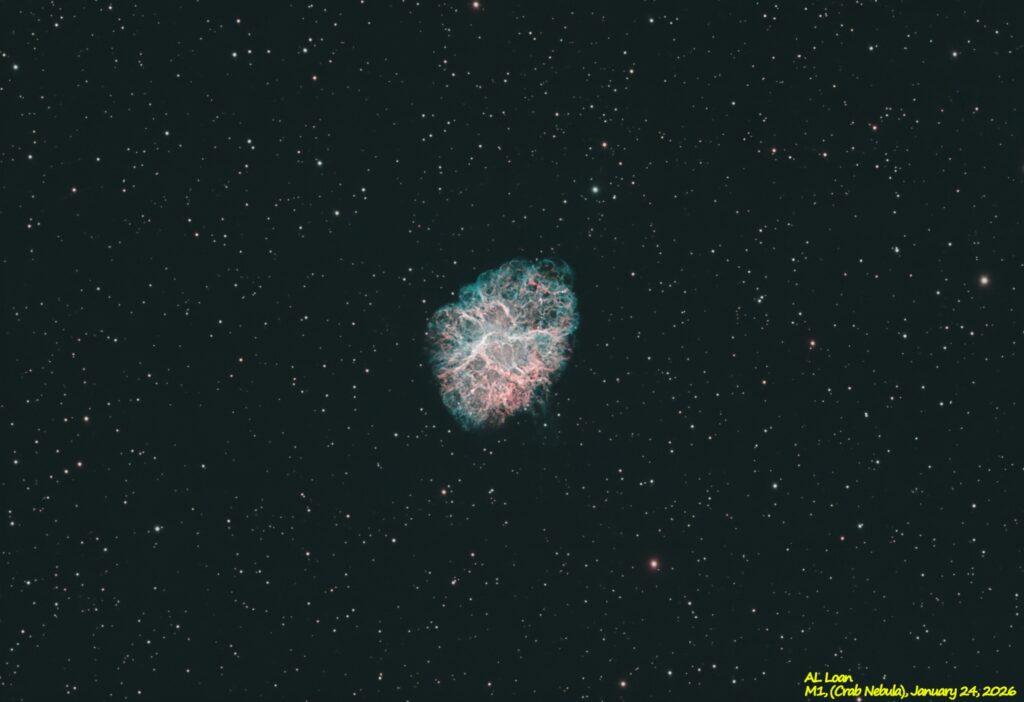
M1, (Crab Nebula)

Date: January 12, 2026

Name: Crab Nebula

Constellation: Taurus

Distance from Earth: ~6,300 ly.

Fun Facts: Chinese astronomers actually witnessed the star explosion in the year 1054.

The “M1” label comes from Charles Messier who was a fellow in France hunting for comets in the late 1700’s. He was getting many false positives from other fuzzy objects, such as galaxies and globular clusters. So…in an effort to remove the confusion and make record of previous observations he started naming the objects M1, M2 etc. There are a total of 110 Messier objects, with the vast majority located in the northern hemisphere. I believe C.M. resided near Paris.

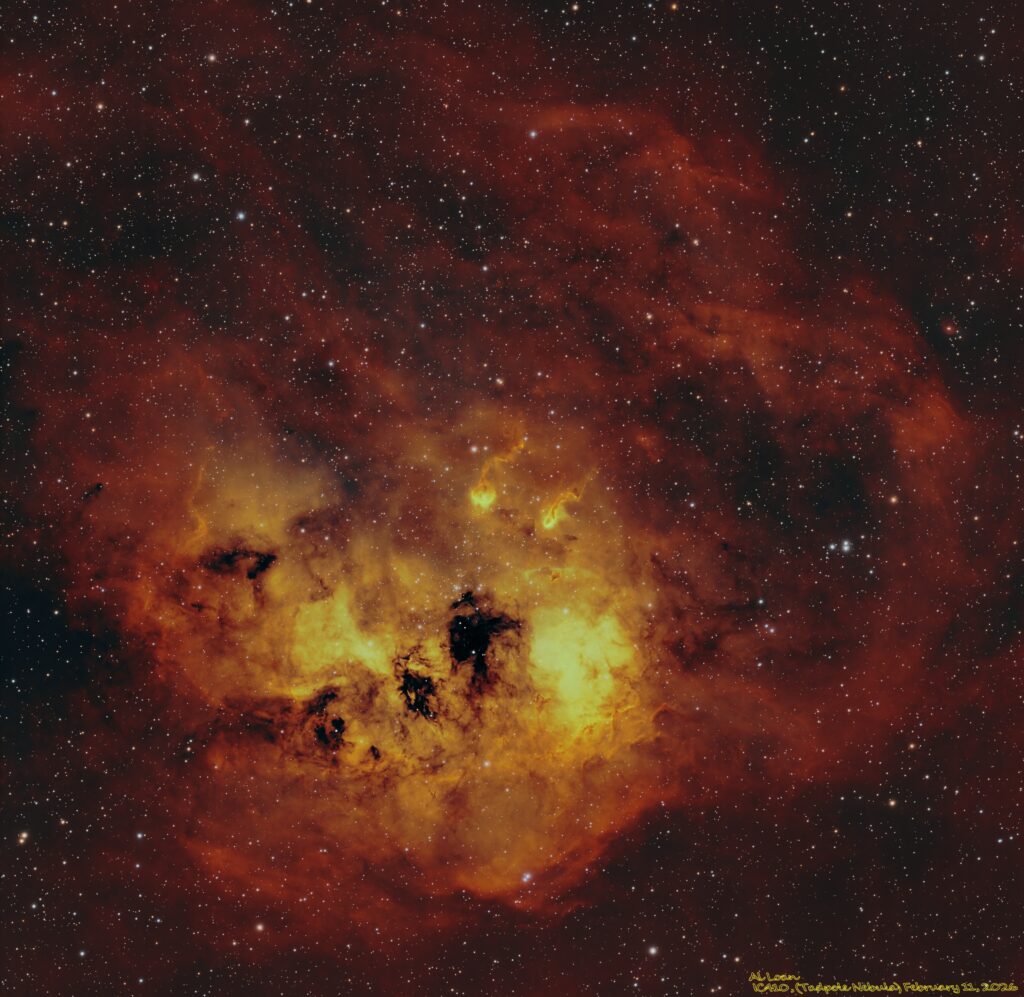
IC410, (The Tadpole Nebula)

Date: February 11, 2026

Name: The Tadpole Nebula

Constellation: Taurus

Distance from Earth: ~12,000 ly.

Capture Details: This image consists of 170, 2-minute exposures captured over two evenings in early February using an Ha/OIII narrowband filter. The frames were stacked and processed in PixInsight.

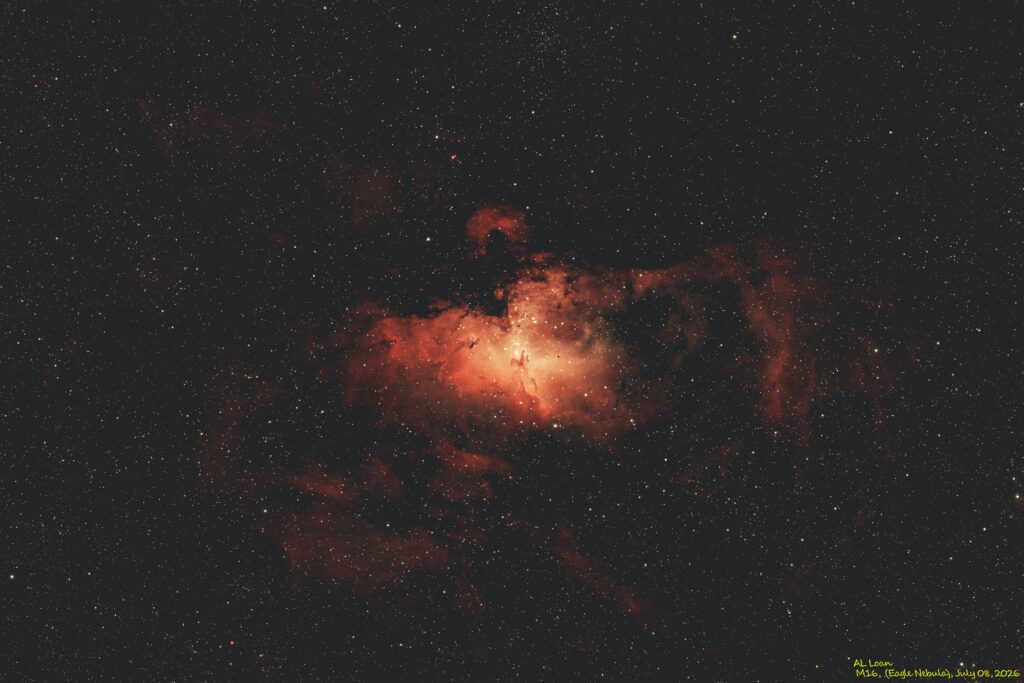
M16, (The Eagle Nubula)

Date: July 08, 2026

Name: The Eagle Nebula

Constellation: Serpens

Distance from Earth: ~5,700 to 7,000 ly.

Capture Details: This image consists of 150 x 2-minute exposures captured over two evenings in early July  using an Ha/OIII narrowband filter. The frames were stacked and processed in PixInsight. 

Fun fact: M16 is a classic mid-summer target located low in the southern sky, reaching a maximum altitude of only about 30 degrees. Imaging it goes against one of my cardinal rules: never image objects below 45 degrees. Every rule has its exceptions, though, and the Eagle Nebula is certainly one of them. Despite its low altitude, it’s a spectacular target that’s well worth the effort.

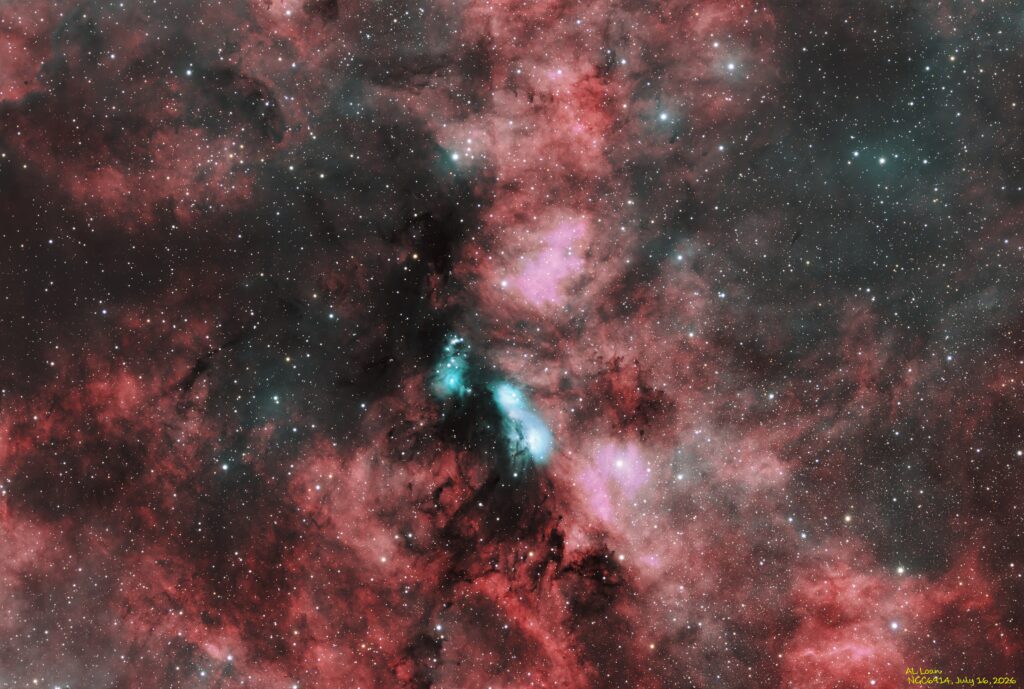
NGC6914

Date: July 16, 2026

Name: NGC6914

Constellation:  Cygnus,

Distance from Earth: ~6,000 ly.

Capture Details: This image consists of 160 x 2-minute exposures captured over two evenings in early July  using an IR-Cut filter. The frames were stacked and processed in PixInsight. 

Fun fact: NGC6914 is a reflection and emission nebulae.